Showing posts with label cybersecurity. Show all posts

Tuesday, March 29, 2022

Top Cybersecurity Best Practices For Employees


Every organization’s backbone is its employees. They ensure that the goals and objectives are achieved and that everything runs smoothly. Humans are still the weakest link in an organization’s chain regarding cybersecurity.

An organization’s cybersecurity needs can be negatively affected by employees who don’t take them seriously. Organizations can reduce their vulnerability by informing employees about information security best practices. Below are the top cybersecurity best practice guidelines for employees to follow so that they can keep their organization safe from data breaches and cyberthreats.

Learn The Best Cybersecurity Practices

How to recognize and avoid phishing attacks

Phishing refers to a social engineering tactic in which an attacker sends a fake message to an employee via email, instant messaging, or text message. The message tries to convince the employee that they will click on a link that downloads malware, freezes their system as part a ransomware attack, or divulges sensitive information.

Scam emails should be avoided by employees. Employees must take extra precautions when opening suspicious email attachments. Employees should be trained on the common red flags to recognize phishing attempts by organizations. A phishing campaign simulation can be used to test the employee’s ability and effectiveness in avoiding attacks. It is best to not enter any personal information or company information via email, pop-up website, or other communication that you did not initiate.

Use multi-factor authentication and complex passwords

It is important to ensure that your organization is secure online by ensuring that passwords used by employees are unique and complex. Combination of upper and lowercase alphabets, numbers, and symbols. Employees who use simple passwords that are easy-to-remember will be able to gain access to sensitive information and company infrastructure.

Employees should enable multi-factor authentication whenever possible. This adds an extra layer of security by asking you to complete at least one additional step, such as providing a temporary code sent to your phone, to log in. Even if a password has been compromised, criminals will still need to have access to another factor to gain access. SpartanTec in Columbia SC can provide your employees with a variety of tools to manage their passwords and help them stay safe.

In addition to the best practices mentioned above, organizations should have policies in place that ensure passwords are regularly changed and not shared with employees. These activities can improve an organization’s cyber security.

Utilizing secure wi-fi networks

It is easy to ensure that your office wi-fi network remains secure and encrypted. However, remote working arrangements mean that organizations must equip employees with the tools they need to protect their data. Due to their open access and lack of security features, public wi-fi networks can pose a significant threat to information security.

Employers can help protect themselves and their information security by ensuring that their employees use virtual private networks (or VPNs) when connecting to their devices via public WiFi networks. VPNs allow for anonymous and undetectable online activity which greatly reduces the chance of someone gaining access to your company’s network or systems.

Data encryption and protection are important

Employers must ensure that they do not disclose any sensitive information to the general public. They also need to take extra precautions when sharing or communicating sensitive information online. The workplace should be treated in the same manner as individuals who avoid giving out their credit card numbers when they answer unsolicited emails, phone calls, or text messages.

Hackers can use clever deception techniques to fool employees by posing as government officials or higher management. Employees should exercise extreme caution when sharing sensitive information. They must double-check the legitimacy of requests and encryption data before they are sent, to ensure that only the intended recipient can access the data with the help a decryption keys.

Make sure you keep your software current and make sure that you have the most recent patches installed on all devices.

The threats to cybersecurity in Columbia SC change constantly, and new vulnerabilities are being discovered each day. Organizations must ensure that employees keep their operating systems, web browsers and security software up-to-date. To combat new cyber threats, antivirus and antimalware programs must be updated regularly. Employees must ensure that their personal devices used to access company networks are updated with the most recent security patches.

Security training and awareness programs should be taken seriously

Onboarding a new employee should not be treated as an afterthought, or as a compliance requirement. Training and awareness programs are essential parts of any onboarding process. Cyber security is not the sole responsibility of the IT department. It also falls on the shoulders of the Information security team. However, employees are responsible for understanding and implementing their organization’s cybersecurity policies. Employees can learn about cyber threats by engaging in training and security awareness materials provided by the organization. This will help them to identify and prevent data breaches and increase their ability to detect dangerous attachments.

Keep a backup of all your critical data

Backup solutions are the best way to protect your business and personal information. Ransomware is one of the most serious threats to your data. Ransomware, a type of malware that encrypts victim’s files and systems, is known as ransomware. Ransomware attacks can cause a company to collapse by encrypting its files, systems and networks.

Ransomware attacks could cause permanent data loss. It is important that employees regularly back up their information using a cloud backup (preferable) or a physical hard drive backup. Cloud backup makes a copy of your data and stores it on a server. It then hosts it in a separate location. Employees should take extra precautions to ensure that physical backups are stored securely and encrypted. These methods can be used to restore data in the event that an employee’s system is corrupted or hack.

What can SpartanTec, Inc. do?

Employers play an important role in information security. By implementing these cybersecurity best practices, employees can make sure that they are contributing to the company’s high level of cybersecurity.

Our team of cybersecurity experts can help you create and launch cybersecurity training programs that are effective for your employees. SpartanTec, Inc. in Columbia SC can help you learn more about our Employee Training services. Call SpartanTec, Inc. now if you need help in boosting your company’s online security measures.

SpartanTec, Inc.
Columbia, SC 29201
(803) 408-7166
http://manageditservicescolumbia.com/

Serving: Myrtle Beach, North Myrtle Beach, Columbia, Wilmington, Fayetteville, Florence, Charleston

Friday, March 25, 2022

Employee Cybersecurity Training


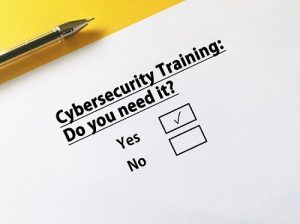
Your organization’s cybersecurity can be improved by empowering your employees to recognize common cyber-threats. Employees learn security awareness training in order to recognize vulnerabilities and threats that could your impact business operations. When using a computer in a business network, employees must be aware of their responsibilities.

To instill a culture of cybersecurity in Columbia SC in your organization, it is important to provide training for new hires and regular refresher course for existing employees.

Cybersecurity: Responsibilities for Company Data

Continue to stress the importance of data security and each employee’s responsibility for protecting company data. Your employees and you have legal and regulatory obligations.

Document Management and Notification

In the event that a computer is infected with a virus or has other abnormalities, employees should be trained on how to report them. Employees should be taught to recognize an alert or warning message. Employees should report such incidents immediately to your IT security team so that they can investigate and mitigate the threat.

Passwords

Your employees should be taught how to choose strong passwords. Passwords should not only be difficult to guess but also be hard to forget so that they are not easily stolen. Employees should receive periodic reminders to change their passwords.

Software that is not authorized

Inform your employees that they cannot install unlicensed software on company computers. You could be vulnerable to malicious software downloading that could corrupt or attack your company’s data.

Internet Use

Your employees should be trained to not click on suspicious links or email from unknown sources. These links could release malware, infect computers, and steal company data. You should also establish safe browsing guidelines and limit employee Internet use in the workplace.

Email

Data theft can be prevented by using responsible email policies. Email scams are something employees should be aware of and avoid responding to emails they don’t recognize. Your employees should be able to accept email from:

  • Someone they trust.
  • They have previously received mail from them.
  • They were expecting it.
  • It doesn’t look strange with unusual characters or spellings.
  • Passes your antivirus program test.

Social Engineering and Phishing

Your employees should be informed to recognize the common cybercrime risks and information security threats, such as phishing, social engineering, and other web-browsing hazards.

Social Media Policy

Your employees should be educated about social media including proper engagement on Facebook, LinkedIn, Twitter, etc.

Mobile Devices

Your employees should be made aware of your policy regarding mobile devices owned by the company and personal devices that are used in the course of business.

Protecting Computer Resources

Your staff needs to be trained on how to protect their computers from theft. Backup copies of critical information should be kept safe and regularly backed-up. Your employees must accept the latest virus protection software updates for company computers.

Having the right policies in place and ensuring ALL your employees have a copy and understand these policies is critical in today’s world of cyber attacks and data threats. However, creating these policies and training your employees can be a daunting task. SpartanTec in Columbia SC has the expertise to assist you and your team put an effective cyber security plan in place.

One step in the right direction is to have your employees follow our Facebook page.

SpartanTec, Inc.
Columbia, SC 29201
(803) 408-7166
http://manageditservicescolumbia.com/

Serving: Myrtle Beach, North Myrtle Beach, Columbia, Wilmington, Fayetteville, Florence, Charleston
Tuesday, March 22, 2022

How To Set And Achieve Your Cybersecurity Goals


Implementing strong cybersecurity measures doesn’t have to scare businesses in Columbia SC.

Cybersecurity is no longer a topic of debate. You might find out the hard way if you don’t understand the importance of cybersecurity measures to protect your system or network.

Cyberattacks can cause severe damage. Regrets may set in. It would be too late, unfortunately.

Are you ready to achieve your cybersecurity goals? Here are some realistic goals you can set.

What is Cybersecurity?

Cybersecurity is a combination of security measures that protect interconnected devices, including software and hardware, as well as data from cyber threats.

Cybersecurity is based on cyber threats. Your system contains valuable information. It could be used as a target by hackers who will go to any lengths to gain unauthorized access.

It suffices to say that without cyber  security, computers and networks would be unprotected and vulnerable to all types of attacks.

As more people use the internet for their business, jobs and personal lives, cybersecurity is becoming more important than ever. It’s better to store data on devices that are restricted to physical locations than it is to store it in the cloud for remote access.

Why is Cybersecurity Important?

risk-management-300x194.jpgCybersecurity is a popular buzzword. Everybody has an idea what it is. However, many people don’t know the exact reasons why cybersecurity is so important.

It is important to understand the importance of cybersecurity and why it should be treated as an urgent matter.

Cybercrime is on the rise

High-profile cyberattacks against influential people and companies were common in the past. Anyone can become a victim.

Cybercriminals want sensitive data they can exploit. It doesn’t matter who has such information. They will only want it if it serves their purpose.

Bottom line, there is no business too small to be hacked. Cybercriminals have access to all your personal information online. It is therefore in your best interests to secure it.

Technology advancement

The Internet of Things (IoT) is at the heart of tech-obsessed society. Everything is connected to the internet to make life easier.

Your computer devices keep track of all your activities and make it easy to do so many things without breaking a sweat. Cyber threats are more likely to strike because of the convenience and connectivity we desire. Attackers are keen to exploit this vulnerability.

Weak Cybersecurity Culture

Multiple online platforms are used by billions of people for work, leisure, and other purposes. Unfortunately, there’s not a strong cybersecurity culture that can help people use the internet safely.

Human error is the main reason for most cyberattacks. There would be fewer cyberattacks if more people were alert to threat vectors. This is where employee training is critical. SpartanTec in Columbia SC  can provide the training needed to keep your employees up to speed with security measures.

A strong cybersecurity culture is essential to prevent any potential threats from online actions. Cybersecurity tools like Intrusion Detection System can detect suspicious activity and mitigate any damage.

5 tips to help your business set and achieve cybersecurity goals

cybersecurity-tips-300x237.jpgTo set and achieve cybersecurity goals, you don’t need to be an expert. It takes dedication to create a security plan and see it through to its completion.

You can create a roadmap of how to make the cyber world safer and more resilient by setting cybersecurity goals. These tips can help you get there.

1. Define your goals

Cybersecurity can be broad. You might find yourself in many places, but not necessarily anywhere.

It is important to clearly define your goal. What cybersecurity goals are you aiming to reach? Are you looking to secure your customer’s data and your personal data? Are you able to identify threats far away and within your own system? These are the questions you should ask.

List the most important areas to you. You can have multiple cybersecurity goals, but you shouldn’t take on more than what you can handle.

2. Identify your most critical assets

What would you most worry about if hackers attempted to enter your system? What are your most important assets.

It doesn’t take long to secure your most valuable assets. You can implement proactive cybersecurity strategies by identifying the assets and taking steps to protect them.

Your other assets are not affected by the priority you give to your most important assets. You can also take measures to protect them. When the chips are down it’s more sensible to protect assets that will most impact you.

3. Prioritize Value Over Cost

Cybersecurity is often resisted due to its high cost. Being cyber secure is not free. Cybersecurity can sometimes be expensive, especially if you are looking to do it all in-house.

Be realistic about the consequences of an attack on your network before you stop dreaming of reaching your cybersecurity goals. It’s possible that you will lose more than what cybersecurity measures cost.

You’ll also be paying a high price for your assets. These troubles can be avoided by investing your money in the right resources.

4. To measure your progress, outline metrics

Measurable cybersecurity goals are the best. You can measure how far you’ve traveled and what changes you made along the way to determine your progress.

However, do not overload the process with too many metrics. You can identify relevant Key Performance Indicators (KPIs), which will give you an idea of your performance. These KPIs should not be difficult to comprehend and relevant to your niche.

5. Create a healthy cybersecurity culture

It is important to have all necessary security measures in place, but one human error can jeopardize your efforts.

It is vital to foster a healthy cybersecurity culture. Keep up-to-date with all the latest cyberattacks and their tactics. This will allow you to detect a cyber threat even from far away.

It is not enough to know everything about cybersecurity. You should ensure that your colleagues are as well-versed in cybersecurity as you. Because you may not always be available when they interact online, this is important. An attacker could just need to convince someone in your team to open an infected file.

Keep your commitment to achieving your cybersecurity goals

There is hope. It is possible to set and achieve your cybersecurity goals with great commitment.

Each layer of security you add to your network makes it harder for attackers to get in. Even the most skilled hackers can only overcome certain obstacles.

Set a goal to contact SpartanTec in Columbia to discuss your security goals and how we can help you meet those goals cost effectively.

SpartanTec, Inc.
Columbia, SC 29201
(803) 408-7166
https://manageditservicescolumbia.com

Wednesday, March 2, 2022

Businesses Must Be Vigilant About Cybersecurity Concerns


Companies are asked to stay vigilant because of the increased cybersecurity issue over the existing situation in Ukraine.

Rising geopolitical tensions in Ukraine and Russia have led to increased cybersecurity concerns. This was exacerbated when Russia mobilized its forces along the border and launched a series airstrike. The invasion saw cyber-attacks on the Ukrainian government, banks, and commercial websites in the weeks that followed.

The United States Cybersecurity & Infrastructure Security Agency has issued guidance to help firms strengthen and protect their cyber programs. This article provides information on the cyber threat and recommends actions to reduce risk for your company.

Steps to take to boost cybersecurity

CISA has issued guidance to organizations on the immediate actions they should take in order to protect their businesses from cyberattacks that escalate due to the conflict in Ukraine. Although the agency has yet to detected any threats, they advise firms to follow their recommendations to stay resilient and prevent future attacks.

Secure access controls

  • Staff should use strong, unique passwords that cannot be shared with other systems.
  • Review any accounts with administrative or privileged access carefully and delete old or unrecognized accounts. Accounts with privileged access or other rights must be managed carefully. Multi-factor authentication (MFA) is recommended where possible. Privilege can be used to access sensitive information or system administration.
  • Validate that remote access to the network of your organization and administrative privileges require MFA.
  • Verify that all ports and protocols not required for business purposes have been disabled by the IT support staff of your organization.

software-patching-300x150.jpgRegularly patch

  • Make sure your users have their desktops, laptops, mobile devices, and other software updated. This includes third-party software like browsers and office productivity suites. Turn on automatic updates if possible. Prioritize updates that address exploited vulnerabilities as identified by CISA. CISA also released a digital catalogue of tools that can be used to help critical infrastructure owners combat rising tensions.
  • Make sure your internet browsers and interfaces are updated for security vulnerabilities.
  • Ensure that all of your critical business systems are patched. Make sure that you have other mitigations in place for any vulnerabilities not yet fixed.

Make sure you test your backups

  • Verify that backups are working properly. To ensure that you are comfortable with the restoration process, test a restore from a backup.
  • Make sure you have an offline backup of your backup. This will ensure that you are always able to access it in case of an attack that causes data loss or changes to the system configuration.
  • Make sure that machine state, as well as any other critical credentials (such private keys or access tokens), are backed up.

network-monitoring-1-300x197.jpgLogging and monitoring

  • Make sure that IT security personnel are focused on quickly assessing and identifying any unusual or unusual network behavior. Allow logging to help you investigate any issues or other events.
  • Know what logs you have, where they are stored and how long they are kept. Ensure that logs are kept at least for one month if possible.
  • When working with Ukrainian organizations, be extra careful to inspect, isolate, and monitor traffic from them; carefully review access controls.

Network security

  • Make sure antivirus software is installed. Also, ensure that signatures are up-to-date and active on all systems.
  • Check to be sure your firewall rules work as they should – especially temporary rules that might have been left in place for a longer period of time.
  • Verify that your records regarding your internet footprint are accurate and current. This includes information such as which IP addresses are used by your system on the internet and which domain names are owned by your company. You should ensure that domain registration data is securely stored in accounts that support multi-factor authentication.
  • Do an external vulnerability scan on your entire internet footprint to ensure that all vulnerabilities have been fixed. Unpatched security vulnerabilities in internet-connected services pose a serious risk.

incident-response-300x256.jpgIncident response planning

To increase operational resilience, identify critical services and systems (banking and power/utilities, communications) to which you can create contingency plans.

Check that your incident response plan includes:

  • Designated crisis-response team with clear roles/responsibilities from members across the organization, including technology, communications, legal, and business continuity.
  • How to respond to an emergency outside of regular office hours and/or when the business system is down.
  • To ensure everyone understands their roles in an incident, conduct a tabletop exercise.
  • To ensure that critical data can quickly be restored in the event of ransomware attacks or other cyber-attacks, test backup procedures.
  • Conduct a test of the operation of industrial control systems and operational technology to verify that critical functions are still available if the network is down or not trusted.

Educate

  • Make sure that all teams within your organization are aware of the situation and the increased threat.
  • It is important that everyone within your organization understands how to report security incidents and why it is important to do so during times of high threat.
  • Boost your company’s IT security with the help of professional IT specialists.

It is a daunting task ensuring your companies cybersecurity systems meet all of the above criteria. SpartanTec in Columbia SC will perform a security audit to ensure your data and employees are secure. Call us today or complete the form to the right and our team of experts will contact you. We look forward to hearing from you. In the meant- stay vigilant.

SpartanTec, Inc.
Columbia, SC 29201
(803) 408-7166
http://manageditservicescolumbia.com/

Serving: Myrtle Beach, North Myrtle Beach, Columbia, Wilmington, Fayetteville, Florence, Charleston

Monday, February 28, 2022

Four Focus Areas of Cybersecurity


When it comes to cybersecurity, there are four focus areas that you need to know about.

Cybersecurity Columbia SC is a threat that affects all organizations, no matter how advanced or large. Technology has brought many unexpected and amazing benefits but it also presents the possibility of increased risks to businesses and even more serious attacks.

Cybersecurity attackers use many of the same technologies as you to create global intrusions using automation and advanced capabilities.

These attacks have been successfully dealt with using reactive methods in the past. However, cybersecurity initiatives today simply cannot afford to sit back and be reactive – you need a proactive approach. Nobody wants to make international news headlines.

Key Areas Of Cybersecurity

Your best opportunity for complete cybersecurity in the future is proactive thinking that considers these four key areas.

#1: Systems

Although it might seem absurd to talk about cybersecurity’s traditional core, it is essential that we take a new approach in protecting applications and networks. Security is a 24×7 job. Many organizations fail to take into account the growing number of devices, software, and products available.

It is important to strategically deploy new technology in your organization so that they do not pose a threat or intrusion. Before implementing these technologies in your IT environment, it is important to understand who they impact and where they will be connected with other systems.

#2: Information

Organizations have failed in information security for many years. It is no surprise that strict laws such as the General Data Protection Regulations (GDPR), are now being passed around the globe.

Cybersecurity is changing from protecting network infrastructure to accessing and managing identity. Hackers continue to attack enterprise data that has high value. You need clear processes and guidelines to guide you in this process. These should not only outline best practices but also provide specific steps to take in the event of a catastrophic situation.

#3: Environment

Modern cybersecurity must go beyond data and devices. It also needs business processes and procedures to ensure effectiveness.

Technology protections will not have a long-lasting impact if they aren’t comprehensive. Security strategies must consider the interaction of employees with technology in order to identify any potential vulnerabilities and unsafe workarounds.

#4: Mobile Technology

While IT security technology is essential, it does not address the most dangerous threat to cybersecurity: people. End-user education is a key component of IT programs today to counter the ever increasing number industry threats.

If employees fail to adhere to industry standards, they have the potential for creating harm. Your work does not end there. Your entire cybersecurity project will be affected if you don’t teach users the right technology management skills.

IT security has been difficult. Every day, hackers are more sophisticated and creative. It’s not always possible to define and know what the best practices are. SpartanTec, Inc. can help.

SpartanTec, Inc.
Columbia, SC 29201
(803) 408-7166
https://manageditservicescolumbia.com/

Serving: Myrtle Beach, North Myrtle Beach, Columbia, Wilmington, Fayetteville, Florence, Charleston

Tuesday, February 15, 2022

Tips to Improve Cybersecurity in Small Businesses


We saw an increase in sophisticated phishing emails schemes after the COVID-19 pandemic. Google blocked more than 18 million coronavirus-phishing attempts daily at the start of the pandemic crisis. Cybercriminals will never miss an opportunity, even if it means a tragedy or a global crisis.

Cybercrimes saw an increase in recent years, with 54% of companies having experienced an incident in their industrial control systems. Even though cybersecurity spending is expected to rise to $1 trillion over five years (2025), not all companies spend enough to secure their networks and data. Cybercrime is predicted to cause the loss of 33 billion records by 2023.

Cybersecurity is a serious concern for small businesses

This is especially true for small and medium-sized businesses. Recent data shows that 70% of small businesses are not prepared to handle a cyberattack and 51% have not allocated any budget to cyber security. No matter how small or large your business may appear, 43% of cyber-attacks target small businesses.

Small businesses are often too small to invest in cyber security, and therefore they are not equipped to handle increasingly sophisticated cyber-attack strategies. This makes them a lucrative target for hackers. This is a dire situation when you consider the cost of a malware attack against a company at $2.4 million.

According to how prevalent the attacks are, the cyber-attacks against small businesses can be divided into these categories:

  • Attack via the Internet 49%
  • Phishing and social engineering 43%
  • General malware 35%
  • SQL injection 26%
  • Compromised / stole devices 25%
  • 21% of people refuse to use services
  • Advance malware / zero day attacks 14%
  • Malicious insider 13%
  • Cross-site scripting 11%
  • Ransomware 2
  • Other 1%

Unfortunately, many small businesses continue to believe that they can ‘fly under the radar’ because they are small. 69% of small businesses continue to not enforce password policies. 16% of small businesses report that they only review their cyber security after a major security incident. Small businesses can use managed IT services to help them protect their networks from rising cyber security threats.

Tips to Improve Small Business Cybersecurity

Layered security can be used to limit access. This will help protect your most important data even in the event of a breach. This could mean that sensitive information can only be accessed on a strictly need-to-know basis. Additional protections such as encryption and passwords can be used. You can use layers of security to include the following:

Asset inventory – A comprehensive review of all hardware and software is necessary to ensure their security and performance. A current inventory of mission-critical and sensitive data, as well as periodic checks of user accounts for inactive accounts, can help to prevent data theft and credential theft.

cybersecurity-Columbia-300x300.jpgNetwork security and perimeter – When threats do infiltrate your defenses, it is helpful to divide your network into zones that have different access levels and security levels. Malicious attacks can be prevented by reviewing your SQL code and using web-application firewalls.

Activity auditing – Regular monitoring and review data and network activity can pinpoint user access and flag suspicious activity.

Use Enterprise-grade firewalls. Enterprise-grade firewalls offer more control and better traffic management than regular firewalls. They are your first line of defense against malicious traffic and prevent accidental clicks to compromise websites.

A strong Mobile Device Policy is essential – Most employees use mobile devices to work remotely and for any other reasons. Access to sensitive data off-premise can make it difficult for employees to use work email from mobile devices. Strong password protection should be used and security apps installed to monitor the use of these devices should be used.

Hire outsourced managed IT services – If this has been a long read, and you are overwhelmed by the steps required and/or estimated budgets to protect your business against cyber security threats then you should seriously consider consulting a local managed service provider in IT Support. They can help you assess your business’s risk and provide the most recent defensive strategies, tools and technologies at predictable and manageable monthly costs.

Centralize hardware management – Please make sure you have a centralized dashboard for all hardware on site (including mobile devices), with pre-set configurations. An asset inventory is a great way to keep track of your equipment. All network logs should also be audited in order to trace any unauthorized device access.

You should strengthen your password policy. In addition to enforcing strong password policies at work, it is important that all employees are required to change their passwords at least once a quarter. For assistance in creating strong passwords, you can use a complex password generator tool. This includes a mixture of capital and lowercase letters, numbers and special characters.

Zero Trust Policy – Although the idea of zero trust policies is still relatively new, it can be very useful in protecting enterprise data and networks. This means that users have access to data and applications only on a need-to-know basis. The strict enforcement of zero trust limits the damage caused by breaches, credential theft, and user violations (accidental and deliberate).

Regular Data Backups – Automate your backup processes. At the very least, make regular backups that are stored offsite. Offsite backups can be used to ensure uninterrupted business services and continuity in the event of a network attack or disaster.

Secure Your Website with SSL – All your website should be secured with secure socket layer (SSL). It ensures that all data can be transmitted securely over the Internet between any computer on your network server and any other computer. This makes data theft impossible. SpartanTec, Inc. can assist you in implementing SSL on your website. This will allow for a higher ranking on Google and safer data practices.

Call SpartanTec, Inc. in Columbia SC now if you need help in improving your computer and network security measures against cyberattacks.

SpartanTec, Inc.
Columbia, SC 29201
(803) 408-7166
http://manageditservicescolumbia.com/

Serving: Myrtle Beach, North Myrtle Beach, Columbia, Wilmington, Fayetteville, Florence, Charleston